
Why Retirees Should Lift Weights
A while back, I wrote a piece on Increasing Healthspan and Lifespan in Retirement, built around Peter Attia's idea of the Centenarian Decathlon. It drew a lot of replies, which made me think many people planning for a long retirement are quietly wondering whether they will be in shape to enjoy it.
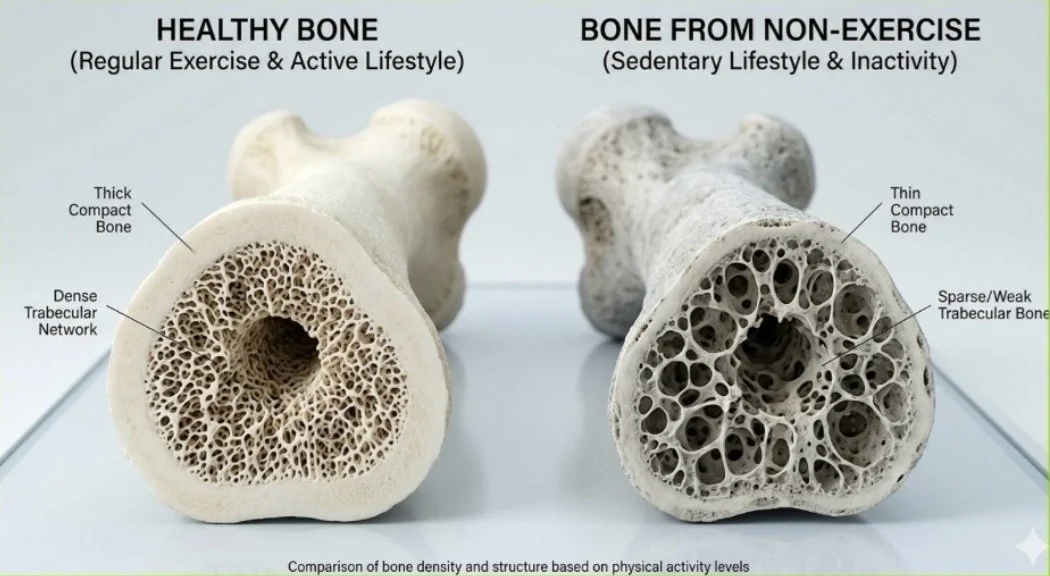
One of the main components of that article was strength training. The idea of weight training and how it affects bone mineral density is not new to me, partly because my wife, Emily, often jokes that she’s working on her bones at the gym. But a few weeks ago, I came across a picture that’s been hard to get out of my head. It was a picture of the inside of two bones – one of a 70-year-old who had weight-trained consistently and another of someone who hadn’t.
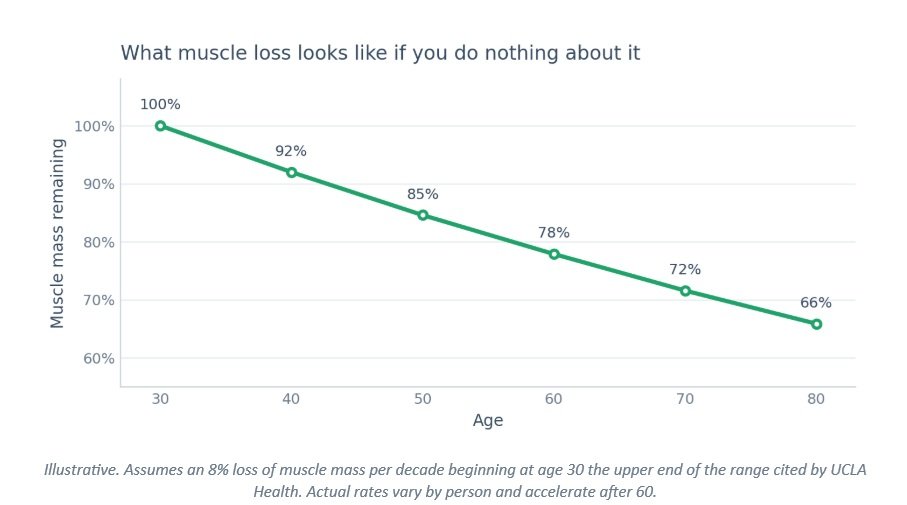
UCLA Health recently published a plain-language summary of the current research (Why Strength Training Is Critical for Older Adults). After age 30, muscle mass falls by as much as 8% per decade, and the decline speeds up after 60. About 30% of adults over 70 have trouble with ordinary movement like walking and climbing stairs. Women can lose up to 20% of their bone mineral density in the seven years following menopause.
Resistance training is one of the few things that slows that process down, and intensity appears to matter. Heavier weight for fewer repetitions does more for bone than lighter weight for many repetitions, and lifting explosively while lowering the weight slowly seems to do even more.
For many people getting started, the right place to begin is with bodyweight movements like squats, lunges, and wall pushups before you touch a dumbbell. Two or three sessions a week on non-consecutive days is the dose used in nearly every study that found a benefit.
Lastly, strength is the least expensive long-term care planning available. The event that most often ends someone's independence is a fall, and what most often prevents a fall is being strong enough to catch yourself. Your overall well-being can be improved by increasing your strength, but it can also help remove some of the financial risk later in life.
Happy Planning,
Alex
This blog post is not advice. Please read disclaimers.