
What Markets Do During Geopolitical Crises
One of the hardest things for investors to do during geopolitical uncertainty is nothing. When conflict breaks out, the instinct is to act. Move to cash. Wait it out. Come back when things feel safer. It's a completely understandable reaction.
Here's what the data actually shows. Since 1941, the S&P 500 has endured World War II, Korea, Vietnam, the Gulf War, 9/11, Iraq, and more than a dozen other military engagements. In the year following each of those conflicts, the average return was +11%. Over five years, +94%. Over twenty years, +685%.
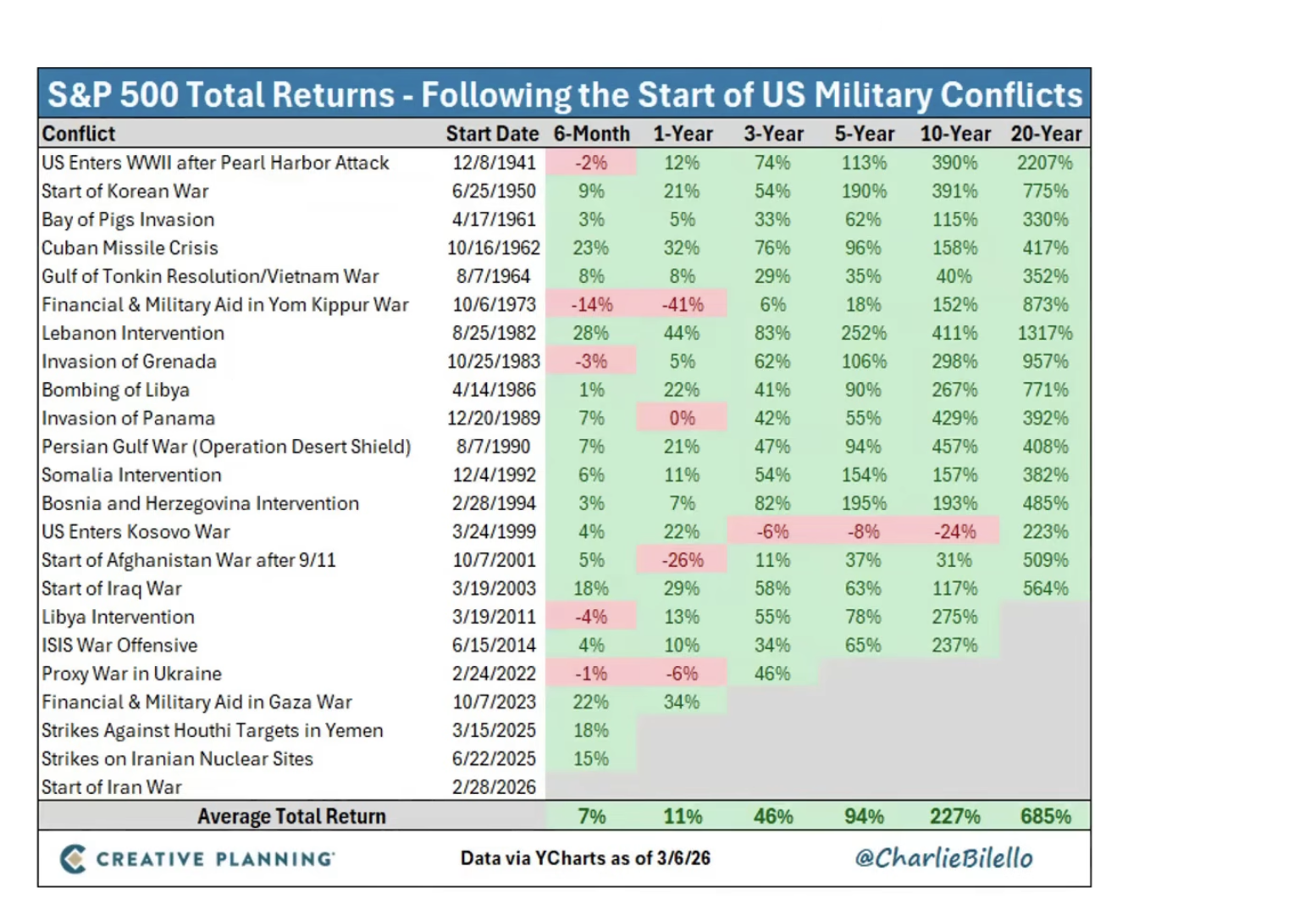
Short-term pain was real in some cases. The Yom Kippur War produced a painful six-month stretch. So did Afghanistan after 9/11. But in both situations, broader economic events (an oil embargo and a dot-com bust, respectively) were doing most of the damage. The conflicts themselves weren't the main culprit.
The deeper problem with trying to time around geopolitical risk is that you have to be right twice. You have to sell near the top, and buy back near the bottom. Markets tend to bottom out before the crisis is resolved, which means waiting for an "all clear" usually means missing the recovery.
And it’s not just one event you have to get right. Over the past 85 years or so, there have been more than 20 geopolitical events, or about 1 every 4 years.
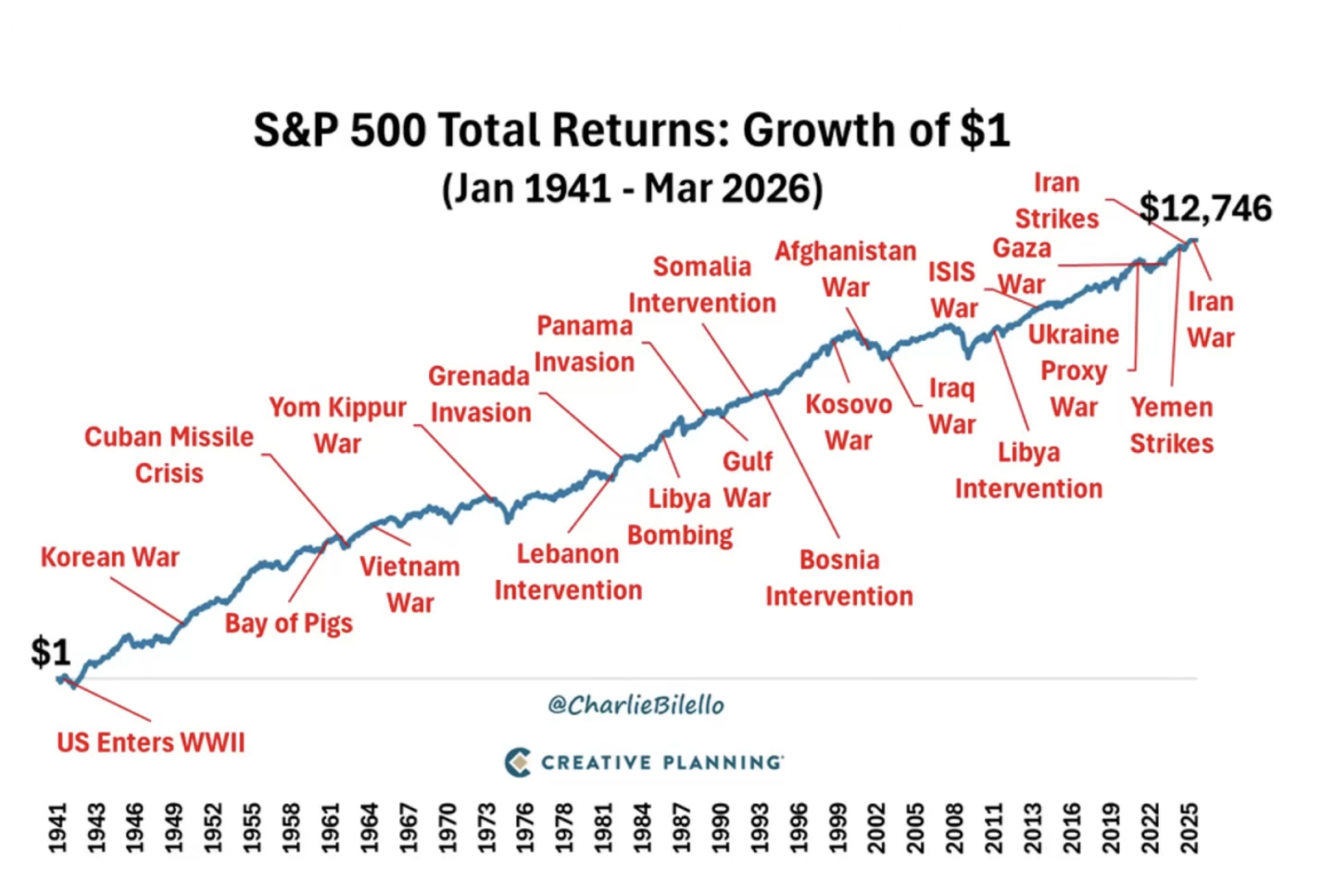
If you commit to investing around these events rather than through them, you’re likely to do this again and again, fighting against a market that has skewed to the upside over the long run. Because of this, we don't try to predict how conflicts unfold or how markets will react in the short term. Nobody can do that consistently. What we can do is stay diversified, stay invested, and let time do its work.
Happy Planning,
Alex
This blog post is not advice. Please read disclaimers.