
The Economy Is Better Than Everyone Thinks
Last week I came across this data point. Simply asked “How do you perceive your situation now and in the future,” 1/3 of American’s reported saying “I’m thriving.” I found this shockingly high. Only 7% said they were “suffering.”
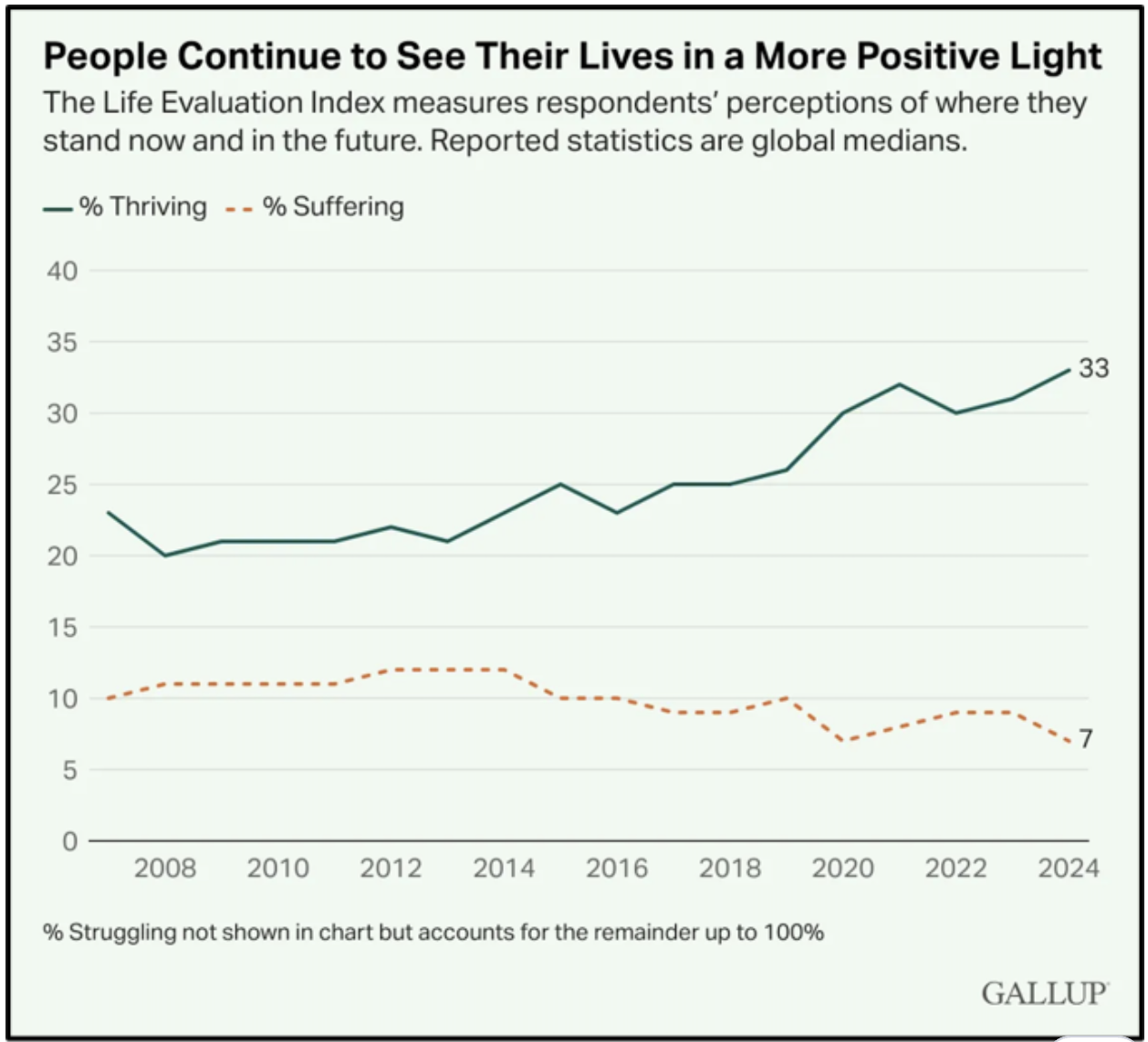
If you had asked me, I would have guessed the other way around. My feelings seem to be shared by many. There’s a disconnect in how most Americans feel about the economy and what the data actually shows. Most people are reporting as doing fine or great but think most others are not. Statistically, that’s impossible.
The news has a lot to do with this. Headlines are filled with inflation worries, layoffs, and weak hiring, which is why consumer sentiment is so low. But when you look at the data objectively, the broader picture is still one of resilience.
Consumer Spending
Consumer spending makes up roughly two-thirds of U.S. GDP, and it’s still growing. Spending has moderated from the frenzy of post-pandemic years, and inflation pressures persist, but that shift toward normal growth is not a recession signal.
The Labor Market
Job creation has clearly cooled. 2025 was slower than 2024, but even weaker growth is still growth, and the unemployment rate remained relatively stable around 4.4%, which historically isn’t recession territory.
Meanwhile, layoffs remain historically low. Recent weekly unemployment claims data show initial claims still near long-term lows, signaling that companies aren’t engaging in mass layoffs despite hesitation to hire aggressively.
The Stock Market
The stock market is near all-time highs. And while the stock market is not the economy, it does correlate with household wealth, which in turn drives personal spending decisions. When portfolios are up, people shop more, they go on vacations, and they renovate their houses.
Why Sentiment Is Low
Despite these strengths, consumer confidence in surveys reached a new low, largely driven by inflation anxiety and job market concerns.
Psychologically, people anchor in their day-to-day experiences, higher prices at the grocery store, slower wage gains versus rising costs, local layoffs. All of this can make it feel like a recession even when the data isn’t indicating one.
Yes, there are areas of concern. Business investment is shaky, tariffs are squeezing certain sectors, and hiring growth has dropped compared with recent years.
But the gap between this data and people’s perception is real, and until public conversations include both feelings and facts, most Americans will probably keep thinking the economy is worse than it actually is.
Happy Planning,
Alex
This blog post is not advice. Please read disclaimers.