How Social Media Algorithms Are Affecting Sentiment
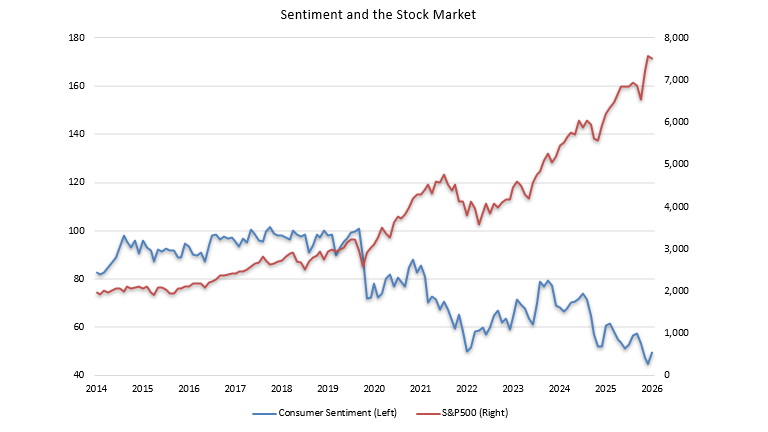
Take a look at that chart above for a moment (source: David Kelly, JP Morgan). The red line is the S&P 500. It has been steadily climbing for over a decade. The blue line is consumer sentiment, which measures how people feel about the economy. It peaked around 2019 and then, starting in 2020, it fell off a cliff and never came back. This gap between the stock market returns and consumer sentiment is unprecedented. Typically, sentiment follows the stock market and is a pretty good contrarian indicator (when sentiment is low, it is often a good time to buy).
Part of the explanation is straightforward. Covid-era inflation hit between 2021 and 2023, and even though the rate has since come back down close to 2%, prices didn't reverse. Your grocery bill didn't get cheaper when inflation cooled. That cumulative price shock is still felt, especially by lower-income households.
But inflation alone doesn't explain why the blue line never even attempts a recovery. In late 2020, facing a threat from TikTok, social media platforms (Facebook, Instagram, Twitter (X), and more began making a quiet but big change. They shifted from showing you mostly photos of people you actually know to algorithmically driven content from all over the internet. You may notice that there are now substantially more politics, violence, and outrage on these platforms than ever before. That’s because that content keeps people scrolling longer. The algorithm learned that anger and fear drive engagement, so it feeds you more of it.
Now think about someone responding to the consumer sentiment survey. I know there are people struggling, but the average American has a job, their 401(k) is up, and their bills are getting paid. But their phone spent the last hour showing them footage of a department store robbery, a political argument, a protest, and a talking head explaining why everything is about to collapse. What do you think happens when a researcher calls and asks, "How do you feel about the economy?"
The good news is that you can do something about the content you see. First, you can curate what you see. I think it’s a good idea to get news when and where you choose, not because you happened to stumble across it. Here’s how to do that on Facebook and Instagram.
Facebook - use the snooze function (three dots on any post) to quiet pages and accounts that consistently send you news. Add up to 30 friends to your “favorites” list to see their posts at the top of your main feed before anything else. Settings & Privacy > Settings > News Feed Preferences > Favorites
Instagram - go to your profile, tap the three-line menu, select "Settings and activity," then "Content preferences." Switch your feed to prioritize accounts you follow rather than algorithmically recommended content.
Second, try to take in actual news and economic data at a time of your choosing. A few places worth bookmarking:
AP News is as close to straight reporting as you'll find. No cable news agenda, no opinion masquerading as fact.
AllSides – For every breaking story, they link to articles from both sides of the political aisle and the center.
Good News Network – Positive news from around the world.
Happy Planning,
Alex
This blog post is not advice. Please read disclaimers.