
A couple sat down with me for their annual review a few weeks ago, and they brought up something I hear more often now than I used to. Their long-term plan is in good shape, they have more than enough. At the same time, both sets of their parents are in their late eighties and have money of their own. The question was whether they could pass along their future inheritance to their kids instead of receiving it themselves.
The answer for them was “yes,” and the tool is called a qualified disclaimer. It is one of the simpler moves in estate planning, although specific rules must be followed for it to be allowed.
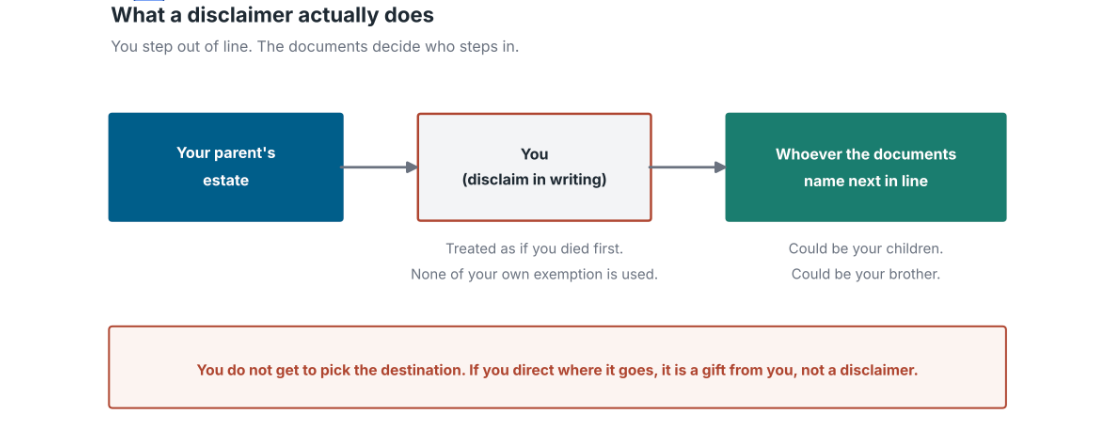
When you formally turn down the inheritance in writing, the IRS treats it as if you had passed away before your parent. Your share moves from their estate to whoever is next in line, and because it was never legally yours, none of your own gift or estate exemption gets used.
There are three things that have to be true for the IRS to treat is as a qualified disclaimer:
1) The disclaimer has to be in writing and delivered within nine months of your parent's death.
2) You cannot have accepted any benefit from the money first, and that bar is lower than people expect, since cashing a single dividend check or taking one distribution can disqualify the whole thing.
3) And you cannot direct where the money goes. You are stepping out of line, not choosing who steps in.
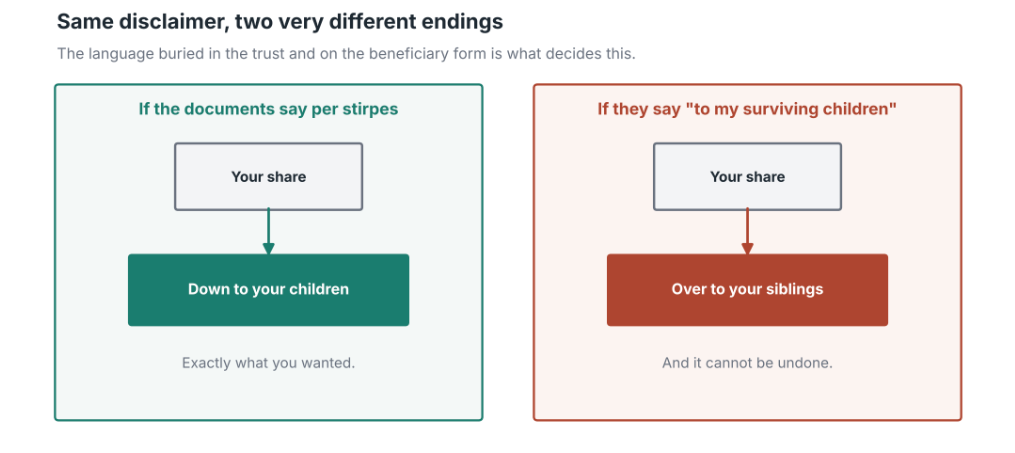
So then who gets it if you pass it up? It goes wherever your parents' documents say it should go if you were not around. If their trust uses per stirpes language, your share passes to your children, which is usually the intent. If the documents instead leave everything "to my surviving children," your share goes sideways to your siblings.
Beneficiary forms are their own issue. The form on an IRA or life insurance policy controls that account regardless of what the will or trust says, and those forms are often decades old and name people in an order nobody has reviewed since. If disclaiming is even a possibility for your family, the time to read all of this is now, while your parents are still around to change it.
There is also a simpler path, which is to skip the disclaimer entirely. Your parents can name the grandchildren directly, or a trust for them, in their own documents. This results in less paperwork and no risk of a technical issue. The only real obstacle is the conversation. Telling your parents you are comfortable enough that you would rather their money go to your kids is not something most people have thought about.
If you think an inheritance is coming and you are not sure you need it, send us the trust documents and the beneficiary forms, and our team will map out where everything would actually go.
Happy Planning,
Alex
This blog post is not advice. Please read disclaimers.